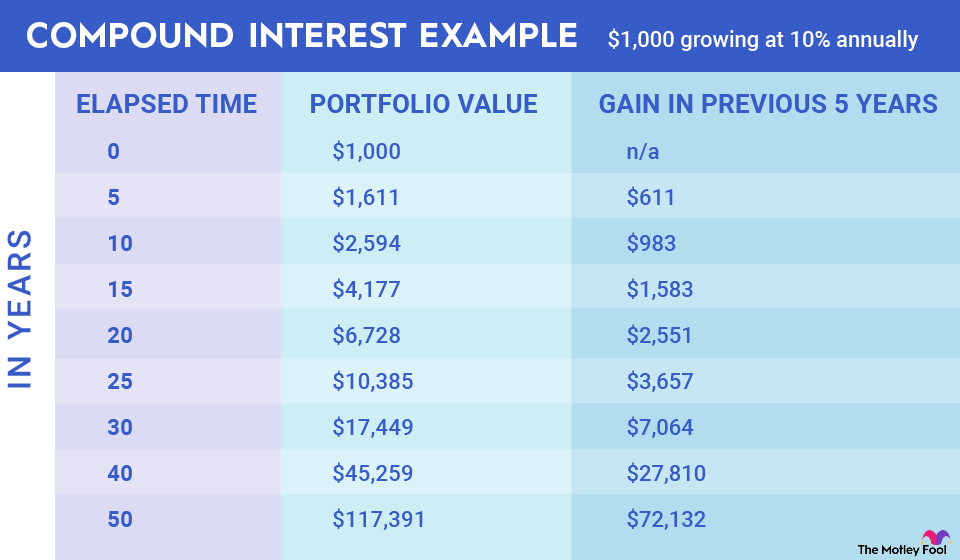
In the realm of personal finance and wealth accumulation, few concepts carry as much transformative power as compound interest. Albert Einstein is famously attributed with calling it the eighth wonder of the world, and for good reason. While the mechanics are mathematically straightforward, the long-term implications for an individual’s financial trajectory are profound. Understanding how compounding works—and, more importantly, how to harness it—is a fundamental competency for anyone serious about building durable wealth in the technology-driven modern economy.
The Mechanics of Compounding
At its core, compound interest is interest earned on interest. Unlike simple interest, which is calculated only on the principal amount, compound interest is calculated on the principal plus any accumulated interest from previous periods. This creates a self-reinforcing growth loop.
The formula is expressed as:
A = P (1 + r/n)nt
Where A is the future value, P is the principal, r is the annual interest rate, n is the number of times interest is compounded per year, and t is the number of years. The critical variable here is t—time. Compounding rewards patience more than it rewards brilliance.
Why Time Outweighs Timing
Many investors obsess over entry points, attempting to time markets with precision. However, the mathematics of compounding suggest that duration in the market matters far more than timing the market. A modest return compounded over four decades will almost invariably eclipse a spectacular return achieved over ten years.
Consider two investors:
- Investor A contributes $10,000 at age 25 and earns an average annual return of 7%, compounded annually, until age 65.
- Investor B contributes $10,000 at age 35 with the same 7% return until age 65.
Investor A ends with approximately $149,745. Investor B ends with approximately $76,123. The ten-year head start nearly doubles the outcome—without any additional contributions. This illustrates the disproportionate leverage of early action.
The Rule of 72: A Practical Shortcut
For quick mental math, the Rule of 72 remains one of the most useful tools in an investor’s repertoire. Divide 72 by the annual rate of return to estimate how many years it will take for an investment to double.
| 4% | 18 years |
| 6% | 12 years |
| 8% | 9 years |
| 10% | 7.2 years |
The implication is clear: even a two-percentage-point improvement in annual returns can meaningfully compress the timeline to wealth accumulation. This is why fee minimization—a central concern in modern fintech and robo-advisory platforms—matters enormously over long horizons.
The Cost of Delay and Fees
Compounding is a double-edged sword. Just as it amplifies returns, it amplifies costs. A 1% annual advisory fee may appear trivial, but over 30 years it can erode a substantial portion of terminal wealth. Similarly, delaying contributions by even a few years can produce a permanent shortfall that no later catch-up contribution can fully offset.
Consider the following:
The delta between starting at 25 versus 35 exceeds $600,000—on identical monthly contributions. This is the silent tax of procrastination.
Compounding Frequency and Real Returns
Compounding can occur daily, monthly, quarterly, or annually. The more frequent the compounding, the higher the effective annual rate. However, for long-term wealth planning, the difference between monthly and daily compounding is marginal compared to the impact of the rate itself and the time horizon.
More important is the distinction between nominal and real returns. Inflation erodes purchasing power, so investors must focus on real, inflation-adjusted compounding. A 7% nominal return in a 3% inflation environment yields a 4% real return—still powerful over decades, but a sobering reminder that nominal figures can flatter outcomes.
Strategic Implications for Long-Term Wealth
To harness compounding effectively, consider the following principles:
- Start early. The cost of waiting is exponential, not linear.
- Automate contributions. Consistency removes behavioral bias and ensures uninterrupted compounding.
- Minimize fees. Expense ratios and advisory costs compound against you.
- Reinvest dividends. Dividend reinvestment is a primary engine of total return.
- Extend the horizon. Resist the urge to liquidate for short-term consumption.
- Stay invested through volatility. Missing the best days in the market can devastate long-term compounding.
Conclusion
Compound interest is not a secret reserved for the financially sophisticated. It is a deterministic force that rewards discipline, patience, and foresight. In an era of instant gratification and algorithmic trading, the most powerful wealth-building strategy remains almost quaint: invest early, invest consistently, keep costs low, and let time do the heavy lifting. The technology may evolve, but the mathematics of compounding endure. Those who internalize this principle position themselves to accumulate wealth not through luck or timing, but through the quiet, relentless arithmetic of exponential growth.
Leave a Reply