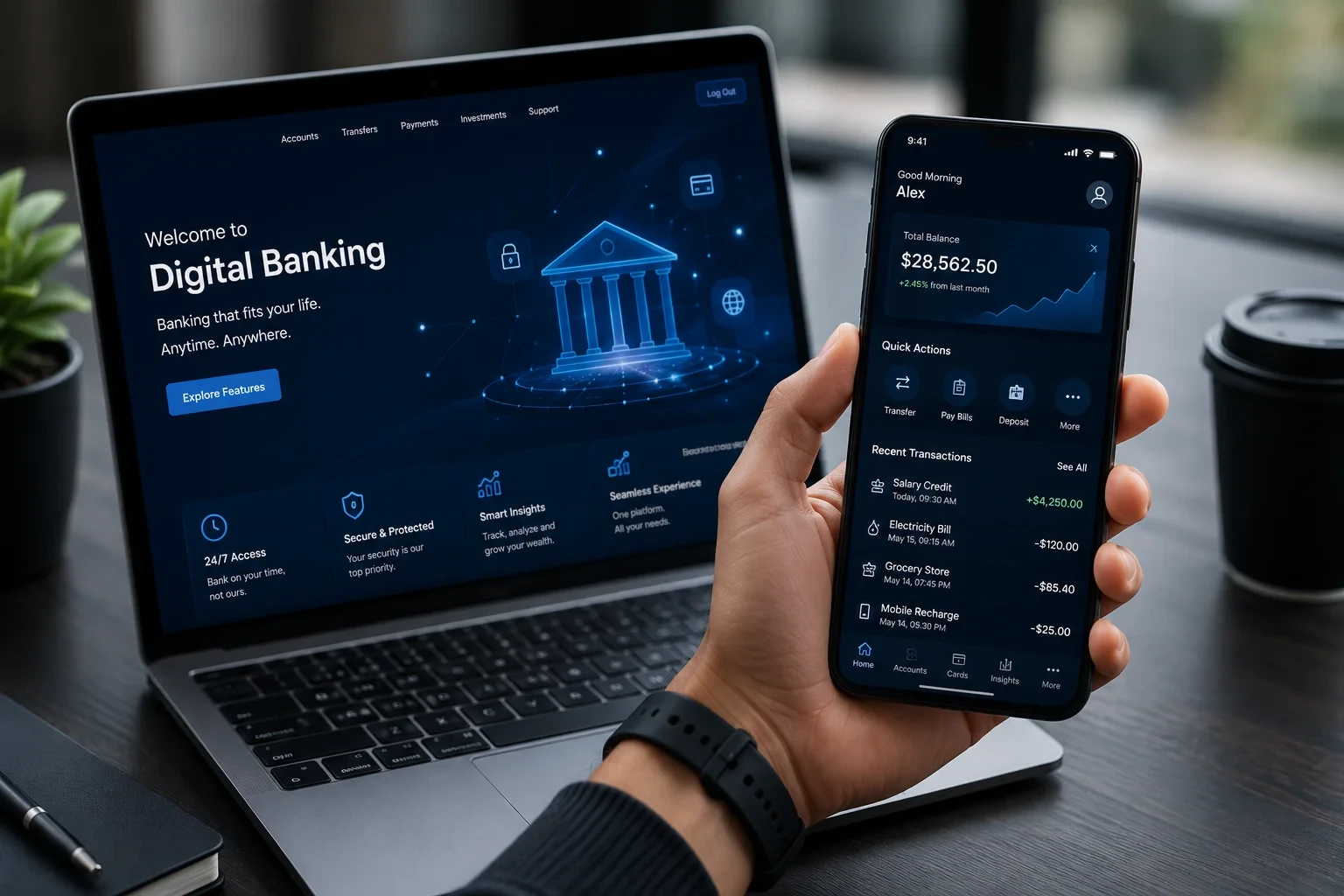
Banking has undergone a remarkable transformation over the past two decades. What was once a relationship built on paper ledgers, physical branches, and weekly trips to a teller has evolved into an always-on digital ecosystem that moves trillions of dollars across the globe in seconds. Understanding how modern banking services actually work is no longer just a topic for financial professionals — it is essential knowledge for anyone who entrusts their money to these institutions. This article breaks down the architecture, technology, and processes that power contemporary banking.
The Core Layer: Core Banking Systems and the Ledger
At the heart of every bank sits a core banking system — a centralized software platform that records deposits, loans, account balances, and customer data. Historically, these systems ran on mainframes using languages such as COBOL, and many still do. Modern banks are gradually migrating to cloud-native cores that offer greater flexibility, real-time processing, and API access.
The core system maintains what is essentially a master ledger. Every transaction, whether a direct deposit, a card purchase, or an interbank transfer, ultimately reconciles against this ledger. When you check your account balance in a mobile app, that figure is pulled from the core banking platform — often through a middleware layer that translates legacy protocols into modern data formats.
Why the Ledger Still Matters
Digital interfaces change rapidly, but the principle of double-entry bookkeeping remains unchanged. For every debit, there is a corresponding credit. Modern banking does not replace this foundation; it accelerates and automates it.
Digital Channels: How Customers Interact With Banks
The most visible layer of modern banking is the digital channel — mobile apps, web portals, and increasingly voice assistants and wearable devices. These interfaces connect to the core through application programming interfaces (APIs) and layered security protocols.
- Mobile banking apps provide real-time balances, transfers, bill pay, and check deposit via image capture.
- Online banking portals offer deeper functionality such as statement downloads, wire requests, and account management.
- Chatbots and virtual assistants handle routine inquiries, freeing human agents for complex issues.
- Open banking APIs allow third-party fintech apps to access account data — with customer consent — enabling budgeting tools and payment initiation services.
Each channel relies on encryption, multi-factor authentication, and tokenization to protect sensitive data. When you log in, your credentials are typically verified against a directory service, and a session token is issued that authorizes subsequent actions.
Payment Rails: Moving Money Behind the Scenes
When you send money digitally, you are not actually transmitting cash. You are instructing your bank to adjust its ledger and coordinate with other institutions through payment rails. These rails vary by speed, cost, and geography.
| ACH (Automated Clearing House) | 1–3 business days | Payroll, bill pay, recurring transfers |
| RTGS (Real-Time Gross Settlement) | Seconds to minutes | High-value interbank transfers |
| Card Networks (Visa, Mastercard) | Seconds (authorization) | Card purchases, e-commerce |
| RTP / FedNow | Seconds | Instant peer-to-peer and business payments |
| SWIFT | 1–5 business days | Cross-border wires |
Understanding the distinction between these rails explains why some payments arrive instantly while others take days. It also clarifies why fraud prevention and compliance checks add friction to certain transactions.
Security, Fraud Detection, and Compliance
Modern banking services operate under intense regulatory scrutiny and constant threat from cybercriminals. Banks deploy multiple layers of defense:
These systems work together to balance two competing goals: frictionless customer experience and robust protection against financial crime.
The Rise of Neobanks and Embedded Finance
Traditional banks no longer operate in a vacuum. Neobanks — digital-only challengers such as Chime, Revolut, and Monzo — build their services on top of licensed banking partners or acquire their own charters. They differentiate through user experience, lower fees, and niche features rather than physical branches.
Meanwhile, embedded finance integrates banking functionality directly into non-financial platforms. Ride-sharing apps offer instant driver payouts. Retailers provide buy-now-pay-later options. Accounting software initiates payments. In each case, the underlying banking infrastructure is abstracted away, leaving only a seamless user experience.
What This Means for Consumers
The boundaries between banks, fintechs, and technology companies are blurring. Consumers benefit from greater choice and convenience, but they must also understand where their money is actually held and what protections apply.
The Future: Real-Time, Programmable, and Invisible
The trajectory of modern banking points toward three themes:
- Real-time everything — Instant payments will become the default, not the exception.
- Programmable money — Smart contracts and conditional payments will automate complex financial agreements.
- Invisible banking — Financial services will fade into the background of daily life, triggered automatically by context and consent.
For all the technological sophistication, the fundamental promise of banking remains unchanged: to safeguard money, facilitate exchange, and extend credit. What has changed is the speed, scale, and seamlessness with which that promise is delivered. Understanding the layers — core systems, digital channels, payment rails, and security — gives you a clearer view of how your money actually moves in the modern world.
Leave a Reply