
Insurance is one of the foundational pillars of personal and commercial financial planning. In an increasingly complex world, where risks range from natural disasters to cyber threats, understanding the nuances of insurance coverage is no longer optional — it is essential. Whether you are a technology professional safeguarding intellectual property or a family protecting its home, the right insurance policy can mean the difference between financial resilience and ruin.
This article breaks down the major categories of insurance, explaining what each type covers, who needs it, and why it matters. By the end, you will have a clear framework for evaluating your own risk exposure and selecting policies that align with your long-term objectives.
Why Insurance Matters in the Modern Economy
Insurance operates on a simple yet powerful principle: the pooling of risk. Many individuals or entities contribute premiums into a collective fund, which is then used to compensate the few who experience covered losses. This mechanism transforms unpredictable, potentially catastrophic expenses into manageable, predictable costs.
For businesses — especially those in technology, healthcare, and manufacturing — insurance also serves as a compliance requirement, a contractual obligation, and a signal of credibility to investors and partners. For individuals, it provides peace of mind and protects accumulated wealth from being erased by a single unforeseen event.
The Major Categories of Insurance
Insurance products are generally classified into several broad categories. The following sections outline the most common types, their core functions, and the scenarios in which they are most relevant.
1. Health Insurance
Health insurance covers medical expenses, including hospital stays, physician visits, prescription drugs, and preventive care. It is often provided by employers, though individuals can purchase policies through government marketplaces or private insurers.
- Key coverage: Hospitalization, surgery, emergency care, mental health services, and preventive screenings.
- Who needs it: Essentially everyone, given the high cost of medical care in most developed economies.
- Considerations: Deductibles, copayments, networks, and out-of-pocket maximums vary widely between plans.
In the technology sector, where employers frequently offer competitive benefits, health insurance remains the most valued non-salary perk. However, freelancers and independent contractors must secure coverage independently, often through marketplace exchanges or professional associations.
2. Life Insurance
Life insurance provides a death benefit to designated beneficiaries upon the insured person’s death. It serves as an income replacement tool and an estate planning instrument.
There are two primary forms:
Life insurance is particularly important for individuals with dependents, outstanding mortgages, or business succession concerns. Tech entrepreneurs often use life insurance to fund buy-sell agreements and protect key personnel.
3. Auto Insurance
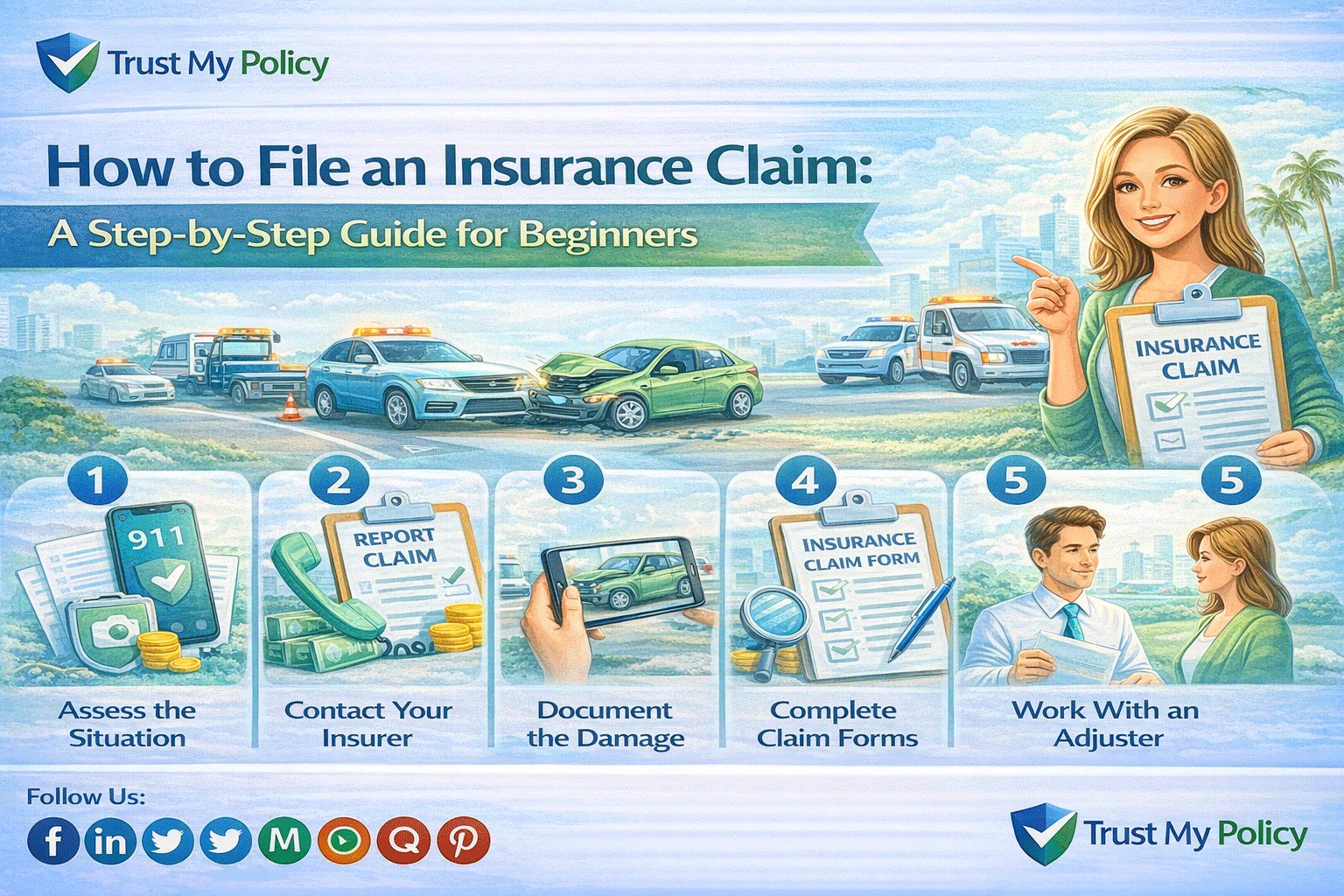
Auto insurance is mandatory in most jurisdictions. It covers liability for bodily injury and property damage caused by the insured driver, as well as damage to the insured vehicle itself.
- Liability coverage: Pays for injuries or damage you cause to others.
- Collision coverage: Pays for damage to your vehicle from a collision, regardless of fault.
- Comprehensive coverage: Covers theft, vandalism, natural disasters, and other non-collision events.
- Uninsured/underinsured motorist coverage: Protects you if the at-fault driver lacks sufficient insurance.
4. Homeowners and Renters Insurance
Homeowners insurance protects against damage to the dwelling, personal property, and liability arising from incidents on the property. Renters insurance provides similar coverage for personal belongings and liability, though it does not cover the building structure itself.
Both types typically cover:
- Fire, lightning, and windstorm damage
- Theft and vandalism
- Water damage from burst pipes (though flooding usually requires separate coverage)
- Personal liability for injuries or property damage caused to others
Given the rise of remote work and home-based tech businesses, many homeowners now require endorsements or separate policies to cover business equipment and professional liability.
5. Business Insurance
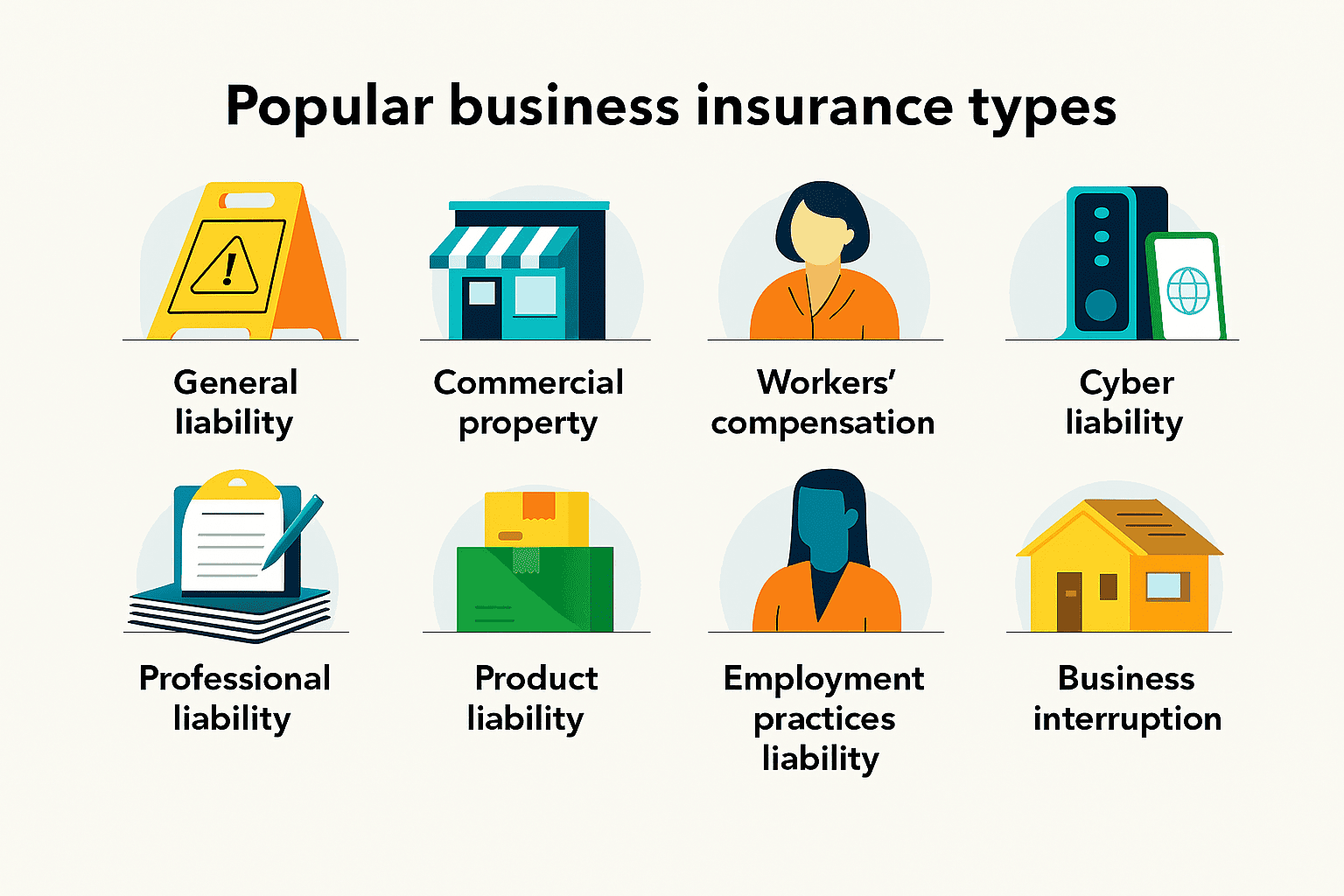
Business insurance encompasses a wide range of policies designed to protect companies from operational, legal, and financial risks. Common types include:
| General Liability | Covers third-party bodily injury, property damage, and advertising injury | Small to large businesses |
| Professional Liability (E&O) | Covers negligence claims related to professional services | Consultants, agencies, tech firms |
| Cyber Liability | Covers data breaches, ransomware, and privacy lawsuits | Any organization handling digital data |
| Workers’ Compensation | Covers employee injuries and illnesses arising from work | Employers with staff |
| Commercial Property | Covers buildings, equipment, and inventory | Businesses with physical assets |
For technology companies, cyber liability and professional liability are increasingly non-negotiable. A single data breach can result in regulatory fines, litigation, and reputational damage that far exceed the cost of premiums.
6. Disability Insurance
Disability insurance replaces a portion of income if the insured becomes unable to work due to illness or injury. It is often overlooked, yet statistically more likely to be needed than life insurance during working years.
Short-term disability covers brief absences, while long-term disability can provide benefits for years or until retirement age. Tech professionals, who often rely on cognitive skills, should carefully review “own occupation” versus “any occupation” definitions in their policies.
7. Travel Insurance
Travel insurance covers trip cancellation, medical emergencies abroad, lost luggage, and other travel-related disruptions. It is particularly important for international travelers, as many health insurance plans offer limited coverage outside their home country.
How to Choose the Right Insurance Mix
Selecting insurance is a matter of balancing risk, cost, and coverage. Consider the following steps:
Conclusion
Insurance is not a commodity to be purchased on price alone. It is a strategic tool that protects your health, wealth, and legacy. By understanding the different types of insurance — health, life, auto, home, business, disability, and travel — you can make informed decisions that align with your personal and professional goals. In a world where risk is constant, preparation is the ultimate competitive advantage.