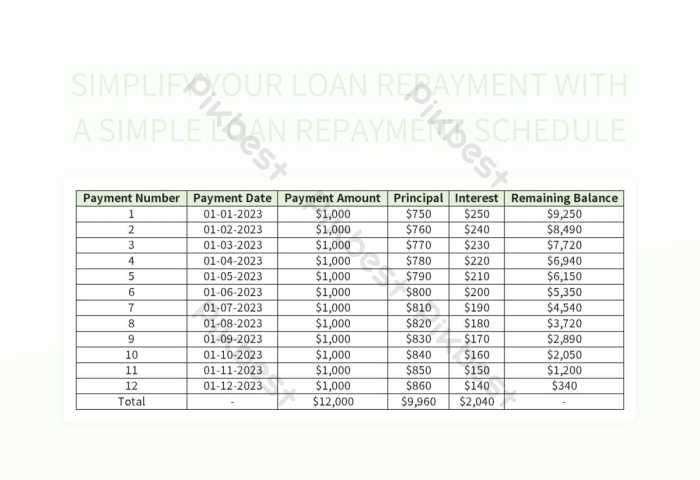


In an era where financial products are increasingly distributed through digital channels, the ability to evaluate loan offers objectively has become a core competency for anyone seeking capital. Whether you are financing a home, consolidating debt, or expanding a business, the difference between a mediocre offer and an optimal one can amount to thousands of dollars over the life of the loan. The challenge is not a lack of options—it is the sheer volume of variables that lenders present in inconsistent formats. This guide provides a disciplined framework for comparing loan offers so you can make decisions grounded in data rather than marketing.
Start With the Annual Percentage Rate, Not the Interest Rate
The single most important metric in any loan comparison is the Annual Percentage Rate (APR). The APR captures not only the nominal interest rate but also the majority of fees and charges associated with the loan, expressed as a standardized yearly cost. This standardization is precisely what makes the APR useful: it allows you to compare offers from different lenders on a like-for-like basis.
Many borrowers gravitate toward the lowest advertised interest rate, but this figure can be misleading. A loan with a slightly higher interest rate but significantly lower origination fees may cost less overall. The APR resolves this ambiguity by folding those costs into a single percentage. When two offers have comparable terms, the lower APR almost always represents the better financial decision.
Why APR Alone Is Not Sufficient
Despite its utility, the APR has limitations. It assumes you will hold the loan for its full term, which many borrowers do not. If you intend to refinance or repay early, prepayment penalties and fee structures can alter the calculus. Treat the APR as your primary filter, but never as your sole criterion.
Evaluate the Full Cost Structure
Beyond the APR, you must itemize every cost associated with each offer. Lenders are required to disclose these in the Loan Estimate or equivalent document, but they are often buried in dense paperwork. Extract and compare the following:
- Origination fees: A percentage of the principal charged for processing the loan.
- Application and underwriting fees: One-time charges that vary widely between lenders.
- Prepayment penalties: Costs incurred if you repay early—critical if you expect to refinance.
- Late payment fees: Penalties for missed or delayed payments.
- Closing costs: For secured loans, these can include appraisal, title, and recording fees.
Summing these costs produces a total cost of credit, which is often more revealing than any single percentage. A loan advertised at a competitive rate can become expensive once ancillary fees are included.
Compare Repayment Terms and Flexibility
Loan offers differ not only in cost but in structure. Two loans with identical APRs can behave very differently depending on their repayment terms. Consider the following dimensions:
| Loan term | Length in months or years | Longer terms lower monthly payments but increase total interest paid |
| Fixed vs. variable rate | Whether the rate changes over time | Variable rates introduce uncertainty; fixed rates offer predictability |
| Prepayment options | Penalties or restrictions on early repayment | Affects your ability to save on interest by paying ahead |
| Payment frequency | Monthly, biweekly, or flexible | More frequent payments can reduce total interest |
| Grace periods | Time before late fees apply | Provides a buffer during financial disruptions |
A loan that offers flexibility—such as no prepayment penalty or the option to make extra payments—carries measurable value, even if its headline rate is marginally higher.
Assess the Lender, Not Just the Loan
A competitive offer from an unreliable lender is a liability. Before committing, evaluate the institution behind the numbers. Key considerations include:
In the technology-driven lending landscape, digital experience is not a superficial concern. A lender with robust infrastructure is more likely to offer accurate statements, timely support, and secure data handling.
Use a Standardized Comparison Matrix
To avoid cognitive overload, consolidate your findings into a single comparison matrix. Rows should represent the criteria; columns should represent each lender’s offer. Populate the matrix with:
- APR
- Nominal interest rate
- Loan term
- Total fees
- Total cost of credit
- Monthly payment
- Prepayment terms
- Lender reputation score
This structured approach forces you to evaluate each offer against the same criteria, eliminating the bias that arises when offers are reviewed sequentially. It also creates a documented record of your decision-making, which is useful if you later need to justify your choice or revisit the terms.
Negotiate Before You Commit
Loan offers are not always final. Many lenders—particularly in competitive markets—are willing to match or beat a competitor’s terms. Once you have a clear picture of your best offer, use it as leverage. Ask the lender to reduce the origination fee, lower the APR, or waive a prepayment penalty. Even a modest concession compounds over the life of a loan.
Negotiation is most effective when you present specific, documented competing offers. Vague requests are easily dismissed; concrete data is not.
Conclusion
Comparing loan offers is a discipline, not an instinct. By prioritizing the APR, itemizing all costs, evaluating repayment flexibility, vetting the lender, and organizing your analysis in a standardized matrix, you transform a complex financial decision into a manageable one. The goal is not simply to find the lowest rate—it is to identify the offer that best aligns with your financial strategy, risk tolerance, and long-term objectives. Approach each offer with the same rigor you would apply to any major technology investment, and the right choice will become evident.