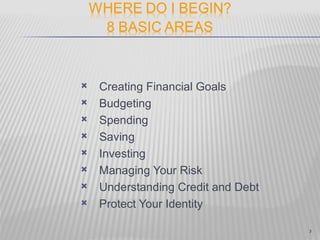


In the technology sector, professionals are accustomed to solving complex problems with structured, data-driven approaches. Yet when it comes to personal finance, many high-performing engineers, product managers, and founders struggle to apply that same rigor. The result is a familiar pattern: ambitious goals that collapse under the weight of an irregular bonus cycle, a sudden stock vesting event, or the rising cost of living in a tech hub.
Setting realistic financial goals is not about lowering your ambition. It is about aligning your objectives with the mathematical and behavioral realities of your income, expenses, and timeline. This guide outlines a professional framework for doing exactly that.
Why Most Financial Goals Fail
Before building a better system, it helps to understand the common failure points. In the tech industry, three issues dominate:
- Vague targets: “I want to be financially secure” is a sentiment, not a goal. It cannot be measured, tracked, or achieved.
- Unrealistic timelines: Saving $100,000 in twelve months on a $90,000 salary is mathematically impossible without extreme external factors.
- Ignoring cash flow volatility: RSU vesting, performance bonuses, and contract work create income spikes that tempt overspending and disrupt steady progress.
Realistic goals respect three constraints: time, income, and competing obligations. Ignore any one of them, and the plan becomes fiction.
Step 1: Establish Your Financial Baseline
You cannot set a realistic goal without knowing your starting point. This step mirrors the diagnostic phase of any engineering project: measure before you optimize.
Calculate Your True Monthly Cash Flow
Gather the last six to twelve months of bank and credit card statements. Average your net income and your total expenses. This is not about judgment; it is about accuracy. Many professionals underestimate discretionary spending by 20 to 30 percent.
Build a Simple Baseline Table
| Net Income (after tax) | $8,500 | Excludes RSU vesting |
| Fixed Expenses | $4,200 | Rent, utilities, insurance, loan payments |
| Variable Expenses | $1,800 | Food, transport, subscriptions |
| Current Savings | $2,500 | Includes 401(k) contributions |
The difference between income and expenses is your investable surplus. Any realistic goal must fit within that number or explicitly account for increasing income or reducing costs.
Step 2: Define Goals Across Three Horizons
Financial goals should be segmented by time horizon. Each horizon carries different risk tolerances and instruments.
Mixing horizons is a frequent error. Investing a down payment in volatile assets because the stock market “usually goes up” ignores the possibility that you need the money during a downturn.
Step 3: Apply the SMART-R Framework
Most professionals know the SMART criteria. For financial goals, a modified version works better: Specific, Measurable, Achievable, Relevant, Time-bound, and Reviewed.
Example: Rewriting a Weak Goal
Weak: “I want to save more money this year.”
Strong: “I will save $12,000 in a high-yield savings account by December 31 by transferring $1,000 on the first of each month.”
The strong version specifies the amount, the vehicle, the deadline, and the mechanism. It also fits within the surplus identified in Step 1. That is what makes it realistic rather than aspirational.
Step 4: Account for Income Volatility
Tech compensation is rarely a flat line. Bonuses, RSUs, commissions, and equity events introduce variance. A realistic plan treats these as supplemental, not foundational.
- Base salary: Fund your fixed goals and monthly savings from predictable income.
- Bonuses and vesting: Allocate a predetermined percentage to goals rather than lifestyle inflation.
- Windfalls: Apply a rule such as 70 percent to debt and savings, 20 percent to investments, and 10 percent to discretionary spending.
This structure prevents the common trap of expanding your lifestyle to match your highest earning month, only to struggle when the bonus cycle resets.
Step 5: Prioritize Competing Goals
You will almost always have more goals than surplus. Prioritization is unavoidable. A useful hierarchy:
Funding goals out of order is how people end up with a well-funded vacation and no emergency buffer.
Step 6: Review and Adjust Quarterly
A financial plan is a living document, much like a product roadmap. Review it quarterly against actual results. Ask three questions:
- Did I hit the savings target this quarter? If not, why?
- Has my income or expense structure changed materially?
- Are my goals still relevant to my life and career trajectory?
Adjustments are not failures. They are calibration. A goal that no longer fits your reality should be revised, not abandoned or forced.
The Bottom Line
Realistic financial goals are built on accurate data, honest constraints, and consistent review. For tech professionals, the discipline that produces reliable software can produce reliable finances as well. Start with your baseline, segment by horizon, apply specific and measurable targets, and treat variable income as a bonus rather than a foundation. Do that, and your goals will move from wishful thinking to executable plans.