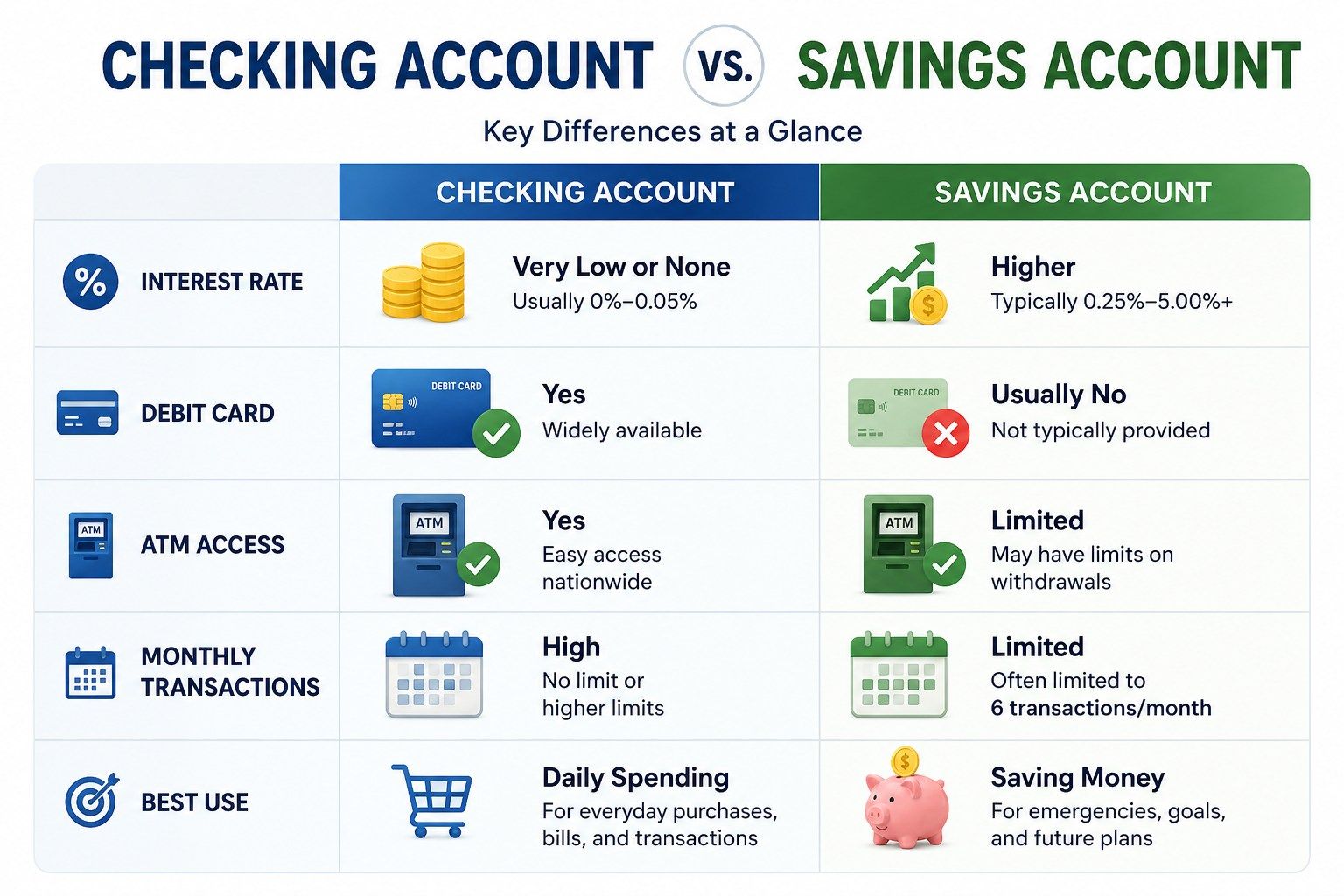


Selecting the right bank account is one of the most consequential financial decisions you will make. A poorly chosen account can quietly erode your savings through monthly maintenance fees, out-of-network ATM charges, and below-market interest rates. A well-chosen account, by contrast, becomes a foundational tool for budgeting, saving, and building long-term wealth. For professionals in the technology sector—where income often arrives through direct deposit, freelance platforms, or equity vesting schedules—the stakes are even higher. This guide outlines the essential criteria to evaluate before committing to any financial institution.
1. Fee Structure and Minimum Balance Requirements
Fees are the most immediate and tangible cost of any bank account. Before opening an account, review the complete fee schedule, not just the headline features. Financial institutions frequently advertise “free checking” while embedding conditions that trigger charges.
- Monthly maintenance fees: Determine whether the fee can be waived through direct deposit, a minimum daily balance, or a set number of transactions.
- Overdraft and NSF fees: These can range from $25 to $35 per incident. Some banks now offer overdraft protection or grace periods.
- ATM fees: Check both the out-of-network withdrawal fee and any surcharges imposed by the ATM operator.
- Foreign transaction fees: Critical for remote workers and frequent travelers, typically 1–3% of the transaction amount.
- Wire transfer fees: Relevant for contractors receiving international payments or paying vendors abroad.
An account is only genuinely free if you can satisfy its conditions without altering your financial behavior. If maintaining a $1,500 minimum balance strains your cash flow, a “free” account may not be free for you.
2. Interest Rates and Yield Potential
Not all bank accounts are designed to grow your money. Traditional checking accounts often pay negligible interest—sometimes as little as 0.01% APY. High-yield savings accounts and money market accounts, frequently offered by online banks, can pay 4% or more depending on prevailing rates.
| Standard Checking | 0.01% – 0.10% | Daily transactions, bill pay |
| High-Yield Savings | 3.50% – 5.00% | Emergency funds, short-term goals |
| Money Market | 2.50% – 4.50% | Larger balances needing liquidity |
| Certificate of Deposit | 4.00% – 5.50% | Funds you can lock away for a fixed term |
For technology professionals with irregular income—bonuses, RSU vesting, or contract payouts—parking surplus capital in a high-yield account can generate meaningful returns with minimal effort.
3. Digital Infrastructure and Integration
Given that most readers of this publication operate in technical environments, the quality of a bank’s digital tooling deserves serious scrutiny. Legacy institutions often lag behind fintech-native banks in API availability, app performance, and data export capabilities.
A bank that cannot integrate cleanly with your financial stack creates friction that compounds over time.
4. Accessibility, Insurance, and Institutional Stability
Every account you open should be held at an institution insured by the FDIC (in the United States) or an equivalent deposit protection scheme in your jurisdiction. Coverage limits typically cap at $250,000 per depositor, per institution, per ownership category. For balances exceeding that threshold, consider spreading funds across multiple institutions or using a network that distributes deposits across partner banks.
Beyond insurance, assess the following:
- Branch and ATM network: Physical access still matters for cash deposits, notary services, and complex transactions.
- Customer support channels: 24/7 phone support, secure messaging, and response times matter during disputes.
- Institutional reputation: Review regulatory actions, complaint databases, and third-party ratings.
5. Alignment With Your Financial Workflow
The optimal bank account is not the one with the highest yield or the lowest fee in isolation—it is the one that fits your financial operating model. A freelance software engineer may prioritize multi-currency support and seamless invoicing. A salaried employee building an emergency fund may prioritize automated transfers and high-yield savings. An early-stage founder managing payroll may prioritize business-tier accounts with sub-accounts and role-based access.
Before signing up, map your requirements explicitly:
- How many transactions do you process monthly?
- Do you need joint access or shared sub-accounts?
- Will you receive funds in multiple currencies?
- Do you require integration with accounting software?
- What is your realistic minimum balance throughout the month?
Answering these questions first transforms account selection from a marketing exercise into a structured evaluation. The right account should fade into the background of your financial life—reliable, transparent, and aligned with how you actually handle money. Choose deliberately, review annually, and do not hesitate to migrate if the terms change unfavorably. In banking, loyalty without leverage is simply an unexamined cost.